Georgetown Dinner Parties Officially Recognized as America's Shadow Editorial Board

The Geography of Influence
A comprehensive analysis by the Institute for Democratic Cartography has confirmed what political insiders have long suspected: America's national agenda is effectively curated by approximately 847 dinner parties occurring annually within a twelve-square-mile radius of Dupont Circle. The study, which tracked legislative priorities from conception to congressional hearing, found that 73% of issues receiving Senate attention originated in conversations held between the appetizer and main course at gatherings in zip codes 20007, 20008, and 20016.
 Photo: Dupont Circle, via thekreeteam.com
"We've essentially outsourced our national editorial process to people who own multiple cheese knives," observed Dr. Miranda Blackstone, lead researcher on the project. "It's remarkably efficient, assuming you define efficiency as ensuring only problems that affect people who summer in the Hamptons receive serious consideration."
The research methodology involved analyzing guest lists from 2,400 social gatherings over eighteen months, cross-referenced with the timing of congressional hearings, think tank publications, and Sunday morning television bookings. The correlation was so strong that researchers initially suspected data contamination.
The Validation Process
According to leaked internal communications from Beltway consulting firm Strategic Horizons LLC, potential national crises undergo a rigorous informal vetting process before achieving official problem status. Issues must first be mentioned during cocktail hour at a minimum of three separate Georgetown gatherings, with at least one reference occurring during dessert service.
"The dessert threshold is crucial," explained former Deputy Assistant Secretary of Something Important, Jennifer Morrison, speaking on condition of anonymity. "Anyone can bring up homelessness during drinks. But if you're still talking about infrastructure during the crème brûlée, you've identified a real priority."
The process typically begins when a mid-level policy analyst mentions a concerning trend to a former cabinet secretary's spouse at a book launch. If the topic survives translation through three degrees of Washington social separation – often passing through a retired Supreme Court clerk, a former ambassador's dinner companion, and someone's Georgetown Law roommate – it qualifies for think tank consideration.
Zip Code Democracy in Action
The Institute's mapping division created detailed visualizations showing the relationship between residential property values and congressional hearing frequency. The data reveals that issues affecting residents of zip code 20007 receive an average of 4.7 Senate hearings per 1,000 affected citizens, while problems concentrated in zip codes beginning with numbers other than "200" average 0.003 hearings per 1,000 affected citizens.
"The efficiency is remarkable," noted Georgetown University political scientist Dr. Harrison Webb, who lives in zip code 20007. "We've streamlined democracy to focus on problems that can be adequately explained during a walking tour of someone's wine cellar."
 Photo: Georgetown University, via www.georgetown.edu
Real estate agents report that proximity to influential dinner party circuits has become a selling point. "Location, location, legislative influence," explained luxury realtor Patricia Hendricks. "Buyers want to know their property taxes include access to informal policy-making processes."
The Appetizer Economy
Economic analysis suggests the Georgetown dinner party industrial complex generates approximately $340 million annually in catering, wine, and strategic conversation facilitation services. The sector employs 1,200 people directly, including specialized "issue whisperers" who ensure proper topics are introduced at optimal moments during multi-course meals.
"Timing is everything," explained event coordinator Sarah Chen, whose client list includes seven former cabinet secretaries and twelve people whose job titles include the word "emeritus." "You can't lead with climate change during the salad course. That's a soup conversation at minimum."
The industry has developed sophisticated protocols for issue elevation. Problems mentioned during appetizers receive preliminary consideration. Issues surviving to the main course qualify for white paper development. Concerns still being discussed during coffee service automatically trigger formation of a bipartisan working group.
Professional Validation Networks
The study identified 23 individuals who attend an average of 3.4 Georgetown dinner parties weekly and serve on a combined 847 advisory boards, steering committees, and informal consultation networks. These "super-validators" possess the ability to transform casual observations into national priorities through strategic name-dropping and well-timed follow-up emails.
"It's really about quality control," explained one super-validator, speaking anonymously while sipping wine that costs more than most Americans' monthly rent. "We ensure only serious problems receive serious attention. Just last month, I helped prioritize the urgent need for better diplomatic parking at Kennedy Center events."
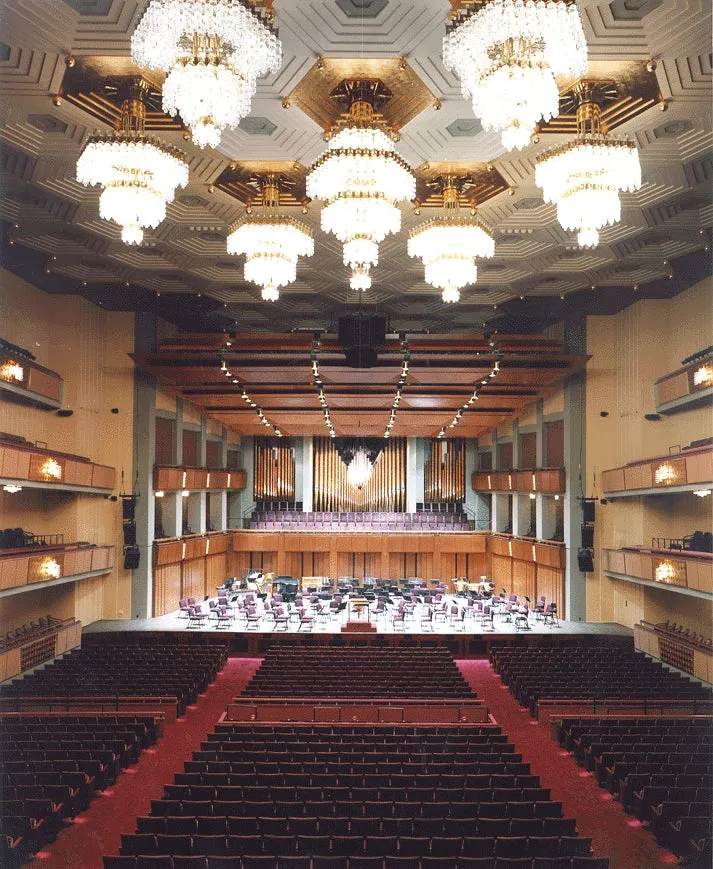 Photo: Kennedy Center, via architizer-prod.imgix.net
The validation network operates through a complex system of reciprocal expertise recognition. Former officials endorse each other's concerns in a carefully choreographed dance of mutual relevance preservation. A retired Treasury secretary validates a former EPA administrator's environmental concerns, who in turn supports the Treasury secretary's thoughts on financial regulation, creating a closed loop of authoritative opinion.
Geographic Expansion Concerns
Recent demographic shifts have raised questions about the sustainability of Georgetown-centric agenda setting. The emergence of influential dinner parties in Alexandria and even some parts of Northwest Washington has created competing power centers, potentially fragmenting the unified editorial voice that has guided American priorities for decades.
"We're seeing agenda dilution," warned Dr. Blackstone. "When former officials start hosting dinner parties in zip codes that begin with '223,' we risk losing the concentrated influence that makes our system so elegantly simple."
Some observers argue this represents healthy democratization of the informal policy process. Others worry that expanding the geographical boundaries of influence could lead to consideration of problems that affect people who shop at regular grocery stores.
Looking Ahead
The Institute for Democratic Cartography plans to expand its research to examine how Georgetown dinner party conclusions are transmitted to actual policymakers. Preliminary findings suggest a sophisticated network of former interns, current spouses, and strategic LinkedIn connections ensures that appetizer-validated concerns reach congressional staff within 72 hours.
"Democracy is messier than people realize," concluded Dr. Blackstone. "But it's also more efficient than anyone imagined. We've created a system where national priorities can be established over a really excellent salmon course, and honestly, that might be the most American thing possible."
The research continues, funded by a grant from the Foundation for Geographic Democratic Innovation, whose board of directors coincidentally includes several Georgetown residents who host excellent dinner parties.