The Building That Forgot to Be Temporary: A Federal Agency's Twenty-Five-Year Relationship With Its 'Interim' Address
The Building That Forgot to Be Temporary: A Federal Agency's Twenty-Five-Year Relationship With Its 'Interim' Address
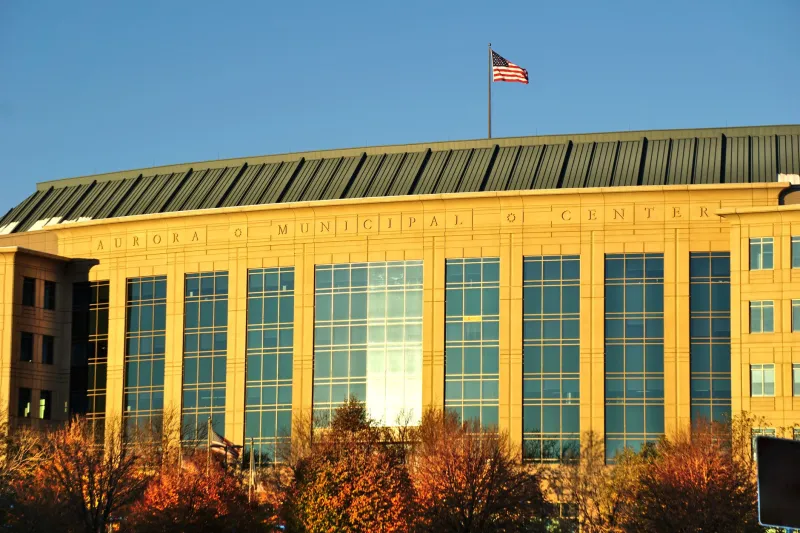
The sign outside the Bureau of Regulatory Assessment and Standards headquarters in Landover, Maryland reads: 'BRAS Interim Operational Facility — Transitional Use Only.' The sign was installed in 2024. It replaced an older sign that said the same thing. That sign had been there since 2003. The building has been there since 1999.
The sign is new. The building is not. The word 'interim' has now appeared on the property for longer than most federal employees have worked for the federal government.
'We felt it was important to have clear, professional signage,' said BRAS Communications Director Howard Fells, who has worked in the interim facility since 2007 and has never seen the permanent headquarters. 'The new sign is powder-coated aluminum. Very durable. Should last twenty, thirty years.'
He did not appear to register the implication of this statement.
How a Brief Renovation Became a Generational Commitment
The story begins, as so many federal stories do, with optimism.
In 1997, the General Services Administration approved a $43 million renovation of BRAS's permanent headquarters building in downtown Washington, a seven-story structure built in 1968 that agency documents described as 'functionally adequate but aesthetically challenging and structurally in need of attention.' The renovation was projected to take eighteen months. Staff would relocate temporarily to a leased facility in Landover. They would return, refreshed, to a renovated building by late 1999.
This is not what happened.
The renovation was paused in 1998 following the discovery of asbestos in the third-floor ceiling tiles, a development described in internal memos as 'unexpected' despite the building having been constructed in 1968, a period not historically associated with asbestos restraint. The asbestos remediation budget was approved, revised, re-approved, and then folded into a broader GSA modernization initiative that was itself paused pending a review of federal real estate priorities under the incoming Bush administration.
The review concluded in 2002. Its recommendation — that the renovation be rebid using updated specifications — added fourteen months to the timeline and $11 million to the budget.
Staff, already in Landover, settled in.
The Renovation: A Brief Chronology
For readers who prefer their bureaucratic dysfunction organized sequentially, the following summary covers the major milestones:
2003: Renovation rebid. Three contractors submit proposals. The lowest bid is rejected on a technicality. The process restarts.
2005: New contractor selected. Work begins. A structural survey reveals that the building's fourth and fifth floors require more extensive reinforcement than originally projected. Budget revised upward to $91 million. Congress approves additional funding, contingent on a GAO review.
2007: GAO review recommends that the renovation be paused pending a broader assessment of whether BRAS should remain in its current downtown location or relocate entirely. A task force is formed to study the question. The task force meets eleven times over two years and produces a 340-page report recommending further study.
2009: Renovation suspended indefinitely as part of Obama administration spending review. Landover lease renewed. Cafeteria added to interim facility.
2012: Renovation reinstated. New contractor engaged. Foundation work begins.
2015: Foundation work completed. Contractor files for bankruptcy. Renovation paused.
2017: New contractor selected. Interior work begins on floors one through three.
2019: Interior work completed on floors one through three. Floors four through seven require redesign following updated federal accessibility standards. Budget now $167 million.
2021: Redesign approved. Work on floors four through seven begins. COVID-19 supply chain delays push projected completion to 2024.
2023: Floors four through seven 95% complete. Dispute over elevator specifications halts final inspection. Projected completion revised to 2025.
2024: BRAS installs permanent powder-coated aluminum signage on interim facility. New task force formed.
The Building That Won
The interim facility in Landover was leased in 1999 for $2.1 million per year. The lease has been renewed nine times. The building now houses 847 employees. The permanent downtown headquarters, when it eventually opens, was designed to accommodate 400.
This discrepancy has not gone unnoticed.
'We've had a lot of growth,' said Deputy Director Margaret Soo, who joined BRAS in 2004 and recently celebrated her twentieth anniversary in what she carefully described as 'this building.' 'The interim facility has served us very well. It has a gym now. And a credit union branch. We added a second parking structure in 2016.'
The permanent building does not have a second parking structure. It does not yet have a functioning elevator.
The question of what happens when the permanent building finally opens — where 847 employees will go when the facility can hold fewer than half of them — has been addressed in a new working group convened in March. The working group has been asked to determine whether the interim facility should be retained as a secondary location, which would require a new lease classification, or whether a portion of the workforce should be relocated to a third building, which would require a new appropriation.
The working group has met twice. Its projected report date is 2026.
The Question Nobody Wanted to Ask
It was a junior analyst in BRAS's Office of Internal Operations who first raised, in writing, the question that has since consumed a remarkable amount of senior staff attention: if a temporary building has been in continuous use for twenty-five years, contains permanent infrastructure, has been listed as the agency's operational address in every federal directory since 2001, and is now the subject of its own facilities planning process, is it still, in any legally meaningful sense, temporary?
The question was forwarded to the agency's general counsel, who forwarded it to GSA's legal division, which forwarded it to the Office of Management and Budget, which referred it to a newly constituted Temporary Facility Classification Review Board that does not yet have a chair, a staff, or a meeting date, but does have a budget of $340,000 and a mandate to report within eighteen months.
If the board determines the building is no longer temporary, it triggers a separate regulatory process under federal real property law that officials describe, with some understatement, as 'involved.'
If it determines the building is still temporary, nothing changes except that the determination will need to be revisited in five years.
The powder-coated aluminum sign outside continues to say 'Transitional Use Only.'
It is, by all accounts, extremely well made.