Capitol Hill's Most Exclusive Club Celebrates Twenty Years of Not Meeting, Plans to Continue Not Meeting Indefinitely

In a city where productivity is measured by the volume of activity rather than its usefulness, the Congressional Rural Waterway Heritage Preservation Caucus has discovered something revolutionary: the power of doing absolutely nothing, but doing it together.
Founded in 2003 during what members describe as "an absolutely delightful lunch meeting at the Capitol Grille," the caucus has maintained its perfect record of non-achievement for twenty years running. With 34 current members, a laminated mission statement, and letterhead that cost taxpayers $347 to design, it stands as perhaps Washington's most successful organization.
 Photo: Capitol Grille, via www.pngmart.com
The Philosophy of Strategic Non-Engagement
"We realized early on that the most effective way to preserve rural waterway heritage was to avoid doing anything that might accidentally damage it," explained Rep. Patricia Hendricks (R-Iowa), who joined the caucus in 2007 and describes her membership as "the highlight of my legislative portfolio."
The caucus operates on what political scientists call the "Schrödinger's Policy" principle: as long as they never actually meet or vote on anything, their mission remains simultaneously accomplished and unaccomplished, thereby satisfying all possible constituencies.
"It's brilliant, really," noted Dr. Amanda Foster, a congressional scholar at the Brookings Institution. "By never taking a position, they can never take the wrong position. By never passing legislation, they can never pass bad legislation. They've achieved political immortality through strategic invisibility."
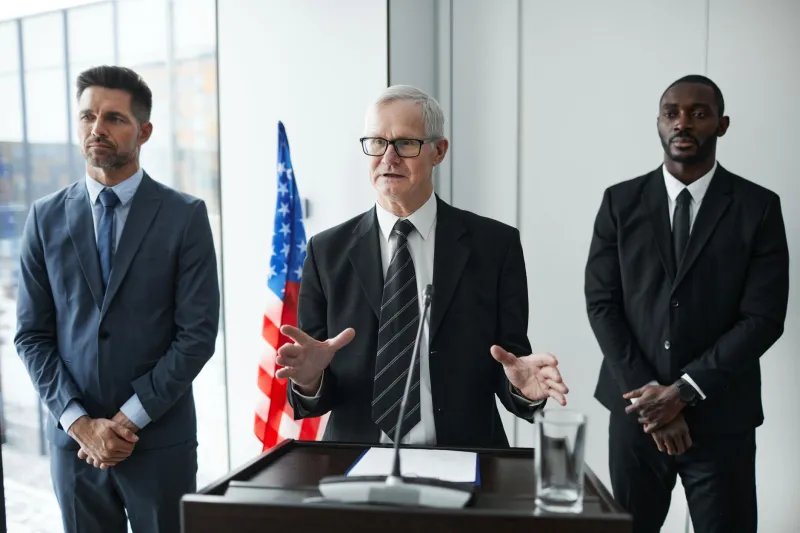
 Photo: Brookings Institution, via static1.cbrimages.com
A Model of Efficiency
The caucus joins an elite group of Washington's 400-plus congressional caucuses, most of which exist in a state of quantum political superposition. The Congressional Pizza Appreciation Caucus (87 members, last met when Domino's sponsored a lunch in 2009) and the House Caucus on Virtual Reality (23 members, exists only in virtual reality) represent similar triumphs of bureaucratic optimization.
"People ask me what the caucus has accomplished," said Rep. Michael Chen (D-Oregon), who was automatically enrolled when he mentioned enjoying kayaking during freshman orientation. "I tell them we've accomplished everything we set out to accomplish, which was nothing specific, so technically we're batting a thousand."
The caucus maintains an active digital presence, with a website last updated in 2004 featuring a photo of a stream that may or may not exist and a mission statement promising to "explore opportunities for synergistic heritage preservation initiatives." The site receives an average of three visitors per year, two of whom are members trying to remember if they're actually members.
The Administrative Marvel
Perhaps most impressively, the caucus has survived four different congressional terms, two government shutdowns, and the complete turnover of its original membership without anyone officially disbanding it. This is partly because disbanding requires paperwork that would need to be filed with the House Administration Committee, and partly because nobody can remember who has the authority to disband it.
"We've created the perfect perpetual motion machine of good intentions," observed Rep. Hendricks. "As long as nobody actually tries to make it do anything, it can keep spinning forever."
The caucus's annual budget of $0 makes it Congress's most cost-effective organization per member. Its carbon footprint is negative, since members no longer drive to meetings they're not attending. Its legislative impact is precisely neutral, which in Washington represents a significant achievement.
The Ripple Effect
The success of the Rural Waterway Heritage Preservation Caucus has inspired similar innovations across Capitol Hill. The Congressional Subcommittee on Subcommittee Efficiency has been studying the caucus model for eight years, though they haven't met to discuss their findings. The Senate Task Force on Task Force Optimization has designated the caucus as a "best practice case study," which they plan to study once they form a task force to study how to study best practices.
 Photo: Capitol Hill, via images-wixmp-ed30a86b8c4ca887773594c2.wixmp.com
"What they've achieved here is the holy grail of Washington politics," explained Dr. Foster. "Maximum symbolic value with minimum actual responsibility. They get credit for caring about rural waterway heritage without the burden of having to figure out what that means or do anything about it."
Looking Toward Tomorrow (From a Distance)
As the caucus enters its third decade of productive non-activity, members are optimistic about maintaining their perfect record. "We're cautiously confident about our prospects for continued non-achievement," said Rep. Chen. "As long as we stick to our core principles of not meeting, not voting, and not doing anything that might require follow-up, I think we can keep this success story going indefinitely."
The caucus's motto, emblazoned on business cards nobody has ever distributed, reads: "Preserving Tomorrow by Not Changing Today." It's a philosophy that has served them well, and with any luck, will continue serving them well for another twenty years of strategic inactivity.
In a city where doing something usually makes everything worse, the Congressional Rural Waterway Heritage Preservation Caucus has discovered the wisdom of doing nothing, together, forever.