Capitol Hill's Walking Wikipedia Announces Retirement, Takes 47 Years of Institutional Memory to Florida
The Last Keeper of the Sacred Knowledge
In the labyrinthine corridors of the Hart Senate Office Building, where institutional memory goes to die and procedural knowledge exists in a state of constant entropy, one woman has served as the unofficial keeper of everything that actually matters. Jennifer Kowalski, Senior Legislative Aide to the Subcommittee on Things That Affect Other Things, submitted her resignation letter last Tuesday, instantly triggering what insiders describe as "the most significant knowledge transfer crisis since someone threw away the filing cabinet that explained how the budget actually works."
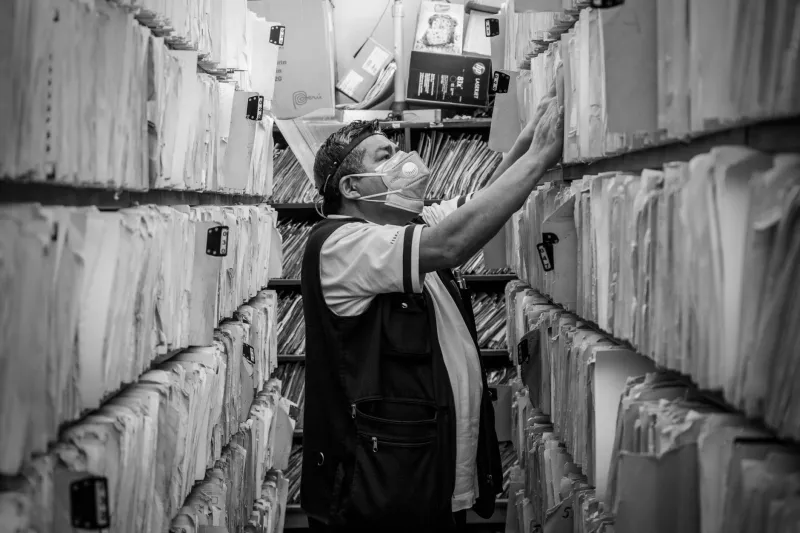
 Photo: Jennifer Kowalski, via i.pinimg.com
 Photo: Hart Senate Office Building, via kabirasafaris.com
For seventeen years, Kowalski has been the human embodiment of Capitol Hill's collective memory, the walking Wikipedia of legislative procedure, and the only person who can explain why the Senate dining room serves exactly three types of soup on alternating Wednesdays. Her departure has prompted a succession crisis that makes the transition between presidential administrations look like a well-oiled machine.
"Jenny knows things that aren't written down anywhere," said Senator Marcus Webb, who has been calling her extension daily for six years without realizing she doesn't actually work for him. "She once saved my entire appropriations amendment by explaining a procedural rule that apparently exists only in her head and possibly in a 1987 memo that someone threw away."
The Accidental Archivist
Kowalski's journey to becoming Capitol Hill's most indispensable person began in 2007 when she was hired as a temporary filing assistant during what her supervisor described as "a minor organizational transition." That transition, it turned out, involved the retirement of three senior staffers who collectively possessed 89 years of legislative experience and had documented exactly none of it.
"On my first day, someone handed me a box of files and said 'Figure it out,'" Kowalski recalled during her exit interview, conducted by four different chiefs of staff who each thought they had scheduled it. "I spent my first month trying to understand why we had seventeen different systems for tracking the same information, and my next sixteen years preventing anyone from accidentally breaking them."
Her institutional knowledge spans four administrations, twelve budget crises, and approximately 847 procedural emergencies that would have paralyzed the legislative process if not for her ability to remember which intern in 2011 knew how to operate the backup system for the backup system.
The Kowalski Protocols
Over the years, Kowalski has developed what colleagues call "The Kowalski Protocols"—an informal network of workarounds, shortcuts, and emergency procedures that keep Capitol Hill functioning despite itself. These protocols include knowing which elevator to take when the main ones break down (which happens every other Thursday), how to reach the one IT person who understands the committee's database system, and the precise sequence of phone calls required to locate any document created before 2015.
"She's like a human search engine for everything that matters," explained Chief of Staff David Chen. "Last month, when we couldn't figure out why our appropriations software kept crashing, Jenny remembered that it conflicts with the parking garage payment system, but only during months that start with 'M.' That's the kind of knowledge you can't Google."
The protocols extend beyond technical knowledge to include what Kowalski calls "relationship maintenance"—her comprehensive understanding of which staffers in other offices can actually get things done, who needs to be copied on which emails to prevent jurisdictional warfare, and the optimal timing for requesting favors based on the congressional calendar and various personal schedules.
The Great Documentation Project
Realizing that her departure could trigger legislative chaos, Kowalski has spent her final weeks attempting to document seventeen years of accumulated wisdom in what she optimistically calls "a comprehensive transition guide." The document, currently 847 pages long and growing, covers everything from the location of backup keys for filing cabinets that may or may not still exist to the complex social dynamics that determine whether bipartisan cooperation is possible on any given Tuesday.
"I've tried to write down everything I can think of," Kowalski said, gesturing toward a stack of binders that has achieved its own gravitational pull. "But honestly, half of what I know only makes sense in context, and the other half involves people who've since retired or moved to lobbying firms."
The transition guide includes detailed appendices on topics ranging from "Why the Photocopier in Room 201 Only Works for Certain People" to "A Complete History of Every Informal Agreement That Prevents Committee Warfare." Early readers describe it as "simultaneously comprehensive and completely useless," noting that it raises more questions than it answers.
The Succession Crisis
With Kowalski's departure imminent, various offices have begun what can only be described as a succession crisis. Three different senators have offered to promote her, despite the fact that she's never worked directly for any of them. Two committee chairs have proposed creating a new position specifically designed to retain her services. The Appropriations Committee has suggested declaring her "essential personnel" and refusing to accept her resignation.
"We're basically looking at the institutional knowledge equivalent of a nuclear winter," said Dr. Amanda Foster, who studies congressional operations at Georgetown University. "When someone like Jennifer leaves, it creates a knowledge gap that can take decades to fill, assuming anyone remembers that the gap exists."
The panic has spread beyond Capitol Hill, with several lobbying firms reportedly offering Kowalski consulting contracts worth more than most senators' salaries. K Street veterans describe her as "the ultimate force multiplier" and "the person who knows where all the bodies are buried, metaphorically speaking, and possibly literally."
The Florida Solution
Kowalski's retirement plans are refreshingly simple: she intends to move to a small town in Florida, tend a garden, and never again explain to anyone why government works the way it does. She has already declined seventeen job offers, four consulting contracts, and one proposal to create a think tank specifically dedicated to preserving her knowledge.
"I just want to grow tomatoes," she said, packing the last of her personal items into boxes labeled with the kind of organizational precision that has made her irreplaceable. "For seventeen years, I've been the person who remembers things so other people don't have to. I'm ready to forget everything and let someone else figure it out."
As for her replacement, the search continues. The job posting, which has been revised fourteen times, currently seeks "a senior legislative aide with comprehensive knowledge of congressional procedure, institutional history, interpersonal dynamics, and the ability to remember things that happened before Google existed." Applications are due next Friday, though no one is entirely sure who should receive them since Kowalski was the person who usually handled hiring paperwork.
Her final day is next Wednesday, assuming she can finish training her replacement, document the remaining undocumented procedures, and explain to four different offices why they can't just "figure it out as they go." The odds of success remain uncertain, but then again, uncertainty has always been Capitol Hill's most reliable constant.