Bipartisan Delegation Returns From European Research Tour With Groundbreaking Discovery That Roads Can Be Fixed

Congressional Research Reaches New Scientific Heights
Twelve distinguished members of the House Subcommittee on Infrastructure Modernization have returned from their week-long European research expedition with findings that could revolutionize American transportation policy: roads, when properly maintained, can actually be driven upon without causing permanent spinal damage.
The bipartisan delegation, led by Subcommittee Chairman Rep. Bradley Morrison (R-Ohio) and Ranking Member Rep. Sandra Chen-Williams (D-California), conducted what Morrison describes as "the most comprehensive international infrastructure assessment in congressional history"—a designation that becomes more impressive when considering the research methodology.
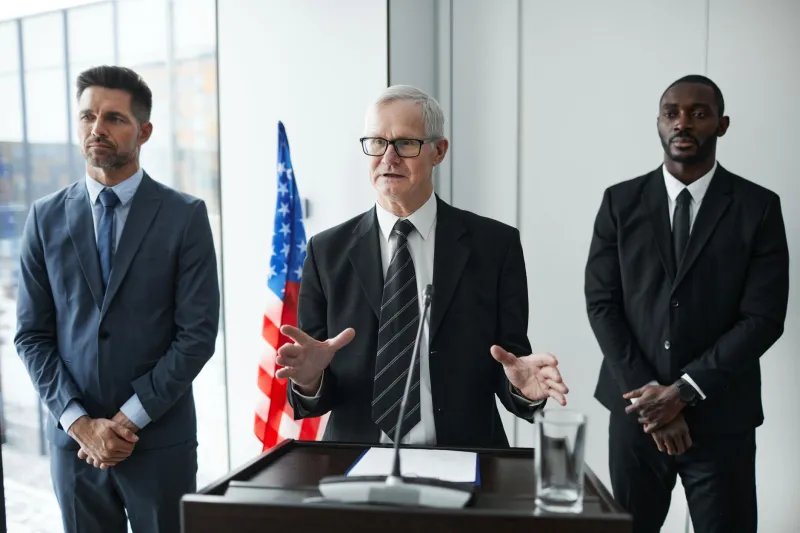
"We didn't just read about European infrastructure in some think tank report," Morrison explained during a press conference held at Ronald Reagan National Airport's Departures lounge. "We experienced it firsthand. We drove on their roads. We walked on their sidewalks. We ate at restaurants accessible by functional public transportation."
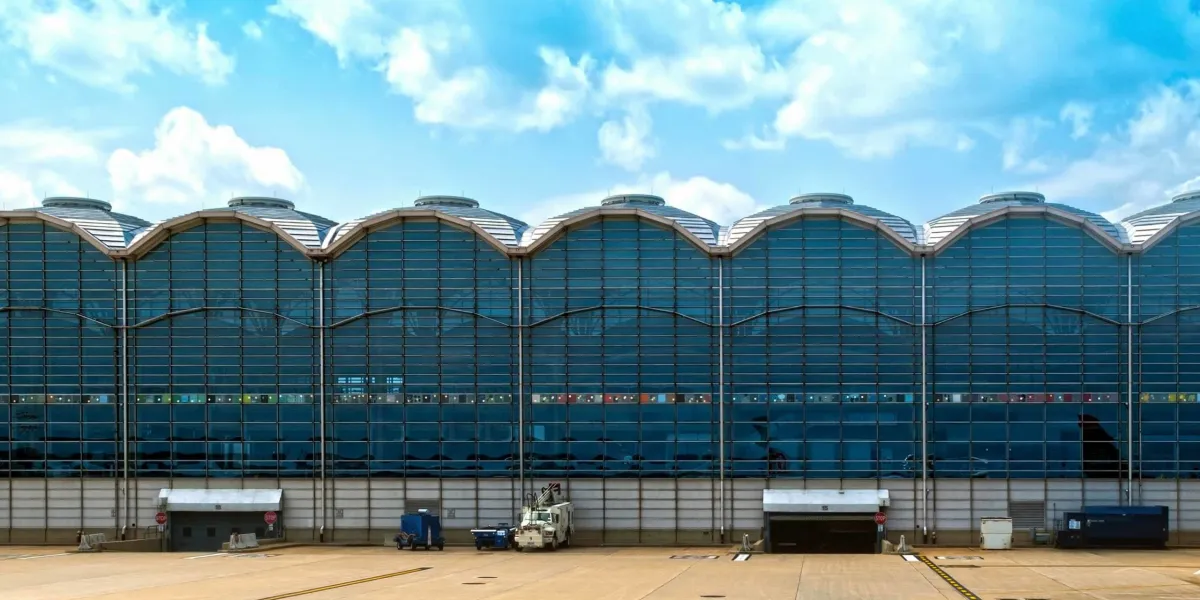 Photo: Ronald Reagan National Airport, via enclos.com
Rigorous Methodology Yields Unprecedented Insights
The delegation's research schedule, obtained through a Freedom of Information Act request filed by The Proceedings Today, reveals a carefully structured approach to data collection. Day one featured a 47-minute bus tour past a French roundabout, during which Rep. Morrison was observed taking detailed notes on his phone—later revealed to be a grocery list.
Days two through four consisted of what the official itinerary describes as "immersive cultural research sessions" at various Parisian establishments, including a four-hour working dinner at Le Jules Verne to discuss American highway funding while observing the Eiffel Tower's structural engineering.
"The French approach to infrastructure is fundamentally different from ours," noted Rep. Chen-Williams, who spent considerable time researching the relationship between wine production and road maintenance quality. "They seem to believe that public works should actually work for the public. It's a fascinating concept that definitely warrants further study."
Breakthrough Observations Challenge Conventional Wisdom
The delegation's eight-page final report, titled "Preliminary Findings on the Theoretical Possibility of Functional Infrastructure: A Comparative Analysis," presents several groundbreaking conclusions that could reshape American policy debates.
Most significantly, the report confirms that potholes are not, in fact, a law of physics, but rather "a preventable road surface irregularity that European nations seem to have largely eliminated through mysterious processes requiring additional investigation."
"We were stunned to discover that their highways don't automatically destroy your car's suspension system," reported Rep. James Kowalski (R-Michigan), who documented his findings through extensive Instagram stories. "At first we thought it might be because European cars are built differently, but then we realized it might actually be the roads themselves."
The report's most controversial finding suggests that infrastructure maintenance might be more cost-effective when performed regularly rather than waiting for complete structural collapse—a theory that Rep. Morrison admits "requires significant additional research to verify."
International Collaboration Reveals Policy Possibilities
Particularly valuable was the delegation's meeting with François Dubois, Director of the French Ministry of Transportation's Regional Development Office, who spent three hours explaining France's approach to infrastructure planning over what the report describes as "a working lunch featuring regional specialties."
"Monsieur Dubois shared some truly innovative concepts," noted Rep. Patricia Huang (D-Oregon). "Apparently, they budget for maintenance before things break, rather than after. It's completely counterintuitive to how we do things in America, but the results speak for themselves."
Dubois, reached for comment, confirmed the meeting but seemed confused about its research value. "They asked very few questions about policy," he noted. "Mostly they wanted to know about the wine pairings and whether I could recommend other restaurants."
Seasonal Variables Require Additional Study
Perhaps most crucially, the report identifies a critical gap in the research that necessitates immediate follow-up investigation. Since the delegation visited during spring, they were unable to observe how European infrastructure performs during other seasons—particularly winter, when American roads traditionally begin their annual disintegration process.
"We can't make policy recommendations based on incomplete data," insisted Rep. Morrison. "What if French roads only work in May? What if their maintenance schedules are dependent on seasonal wine harvests? These are the kinds of variables that responsible legislators must investigate thoroughly."
The report therefore recommends a follow-up research mission during winter months, preferably to Switzerland or Austria, where delegation members can observe alpine infrastructure management techniques while conducting additional cultural immersion research.
Bipartisan Unity Emerges Through Shared Discovery
Remarkably, the European research experience has created unprecedented bipartisan agreement among delegation members—not about infrastructure policy, but about the urgent need for more international fact-finding missions.
"This trip has shown us the value of hands-on research," explained Rep. Chen-Williams. "You simply can't understand foreign infrastructure systems without experiencing their entire cultural context, including their approach to hospitality, cuisine, and leisure activities."
Rep. Morrison agreed, noting that the delegation's unity demonstrates the power of international collaboration. "We may disagree about domestic policy, but we're completely aligned on the need for thorough, repeated international research missions to fully understand these complex systems."
Implementation Timeline Remains Flexible
While the report stops short of making specific policy recommendations, it does establish a framework for future action. The subcommittee plans to spend the next eighteen months reviewing the findings, during which time additional research missions may be necessary to verify the initial conclusions.
"Rome wasn't built in a day, and we can't expect to revolutionize American infrastructure overnight," Morrison concluded. "But thanks to this groundbreaking research, we now know that road repair is theoretically possible. That's the kind of bipartisan progress the American people deserve."
The subcommittee's next meeting is scheduled for September, assuming members return from their August recess research trips to Scandinavia, where they plan to study Nordic approaches to bridge maintenance.